Outback Camping in Jasper During January
Outback (backcountry) camping in Jasper National Park during January is a serious winter undertaking suited to experienced cold-weather travelers. This period represents true alpine winter in the Canadian Rockies, with sustained sub-zero temperatures, deep snowpack, short daylight hours, and rapidly changing mountain weather. While the park remains open year-round, January backcountry travel requires advanced planning, technical winter skills, and a conservative approach to terrain selection.
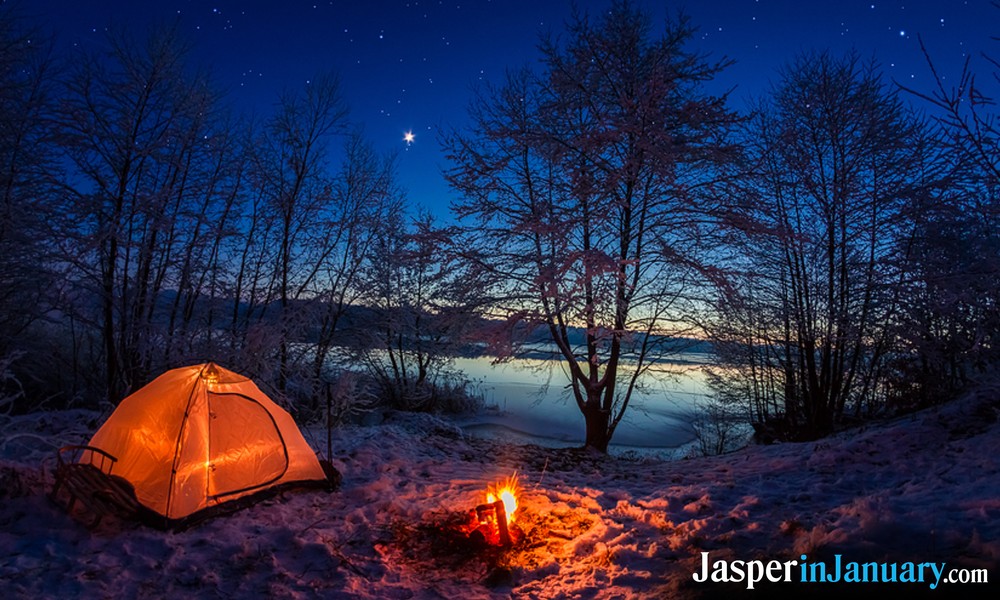
Most January backcountry camping occurs in lower-elevation forested zones or along established winter routes rather than high alpine basins. Snowshoeing or ski touring is essential, as trails are unmaintained and buried under snow. Campsites are typically improvised snow camps rather than designated summer pads, requiring snow excavation, tent platforms, and strong anchoring systems. Wind exposure, especially in open valleys, can significantly increase perceived cold and must be factored into campsite choice.
Avalanche awareness is a critical consideration in January. Early-season and mid-winter snowpacks often contain persistent weak layers, making many alpine and steep valley routes unsuitable for travel. Even experienced parties frequently limit objectives to low-angle terrain well away from avalanche paths. Guided winter camping trips are available and are often the safest option for visitors unfamiliar with Jasper's snowpack, weather patterns, and route-finding challenges.
Despite the demands, January outback camping offers exceptional solitude and atmosphere. Wildlife tracks are often visible in fresh snow, nights are profoundly quiet, and clear conditions can deliver brilliant stars and northern lights. For those properly equipped and prepared, winter camping in Jasper during January provides an immersive and uncompromising mountain experience that reflects the park at its most raw and authentic.
Jasper in January Home
 Book Jasper
 Jasper in January