Mammals in Jasper During January
Mammals in Jasper National Park during January reflect a landscape shaped by deep winter conditions, limited food availability, and energy conservation. While overall wildlife activity is reduced compared with warmer months, January can be an excellent time to observe certain mammals because snow cover concentrates animals in predictable habitats and makes tracks and movement more visible.
Large ungulates are the most commonly seen mammals in January. Elk, moose, and bighorn sheep remain active and are often found in valley bottoms, open forests, and along river corridors where snow is shallower and forage more accessible. Elk are frequently seen near the Jasper townsite and along plowed roads, while moose tend to favor riparian areas with willow and shrub growth. Bighorn sheep are especially visible in winter as they move onto wind-scoured slopes and south-facing exposures.
Predators are present year-round but are more elusive. Wolves, coyotes, and foxes remain active in January, traveling long distances along packed snow, frozen rivers, and game trails. Actual sightings are less common than evidence of their presence, such as tracks, scat, or howling heard on quiet winter nights. Cougars and lynx are present but are rarely seen, particularly during mid-winter.
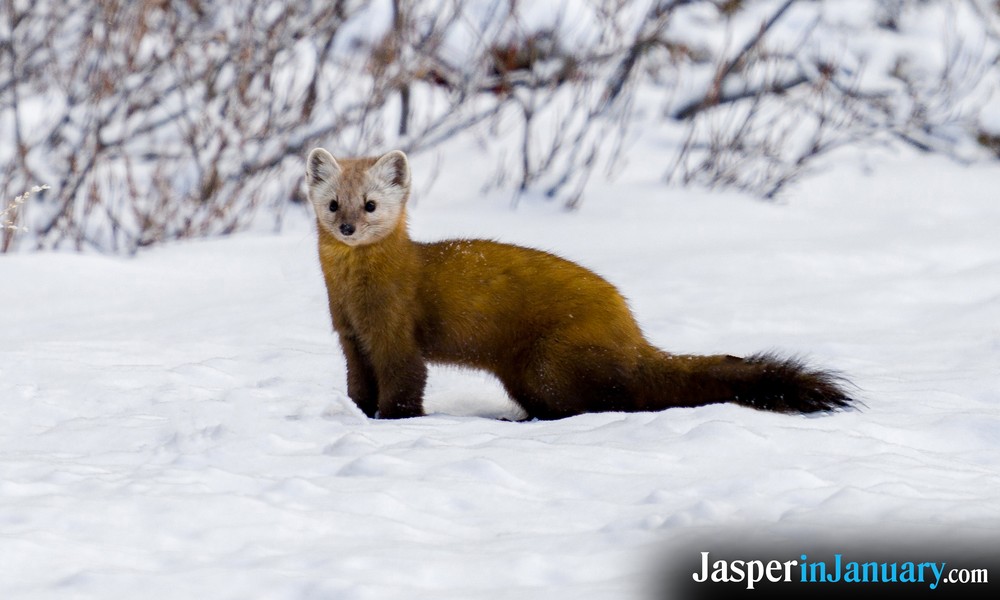
Several mammals are largely absent from view in January due to hibernation or reduced activity. Grizzly bears and black bears are denned and inactive, while smaller mammals such as ground squirrels and marmots are also dormant beneath the snow. Others, including snowshoe hares and pine martens, remain active but are subtle and most often detected through tracks rather than direct observation.
January offers a clear window into how mammals survive winter in the Canadian Rockies. Fewer species are visible, but those that are present reveal distinct winter behaviors and habitat use. For visitors willing to observe patiently and respect wildlife space, Jasper's winter mammals provide a compelling glimpse into life under extreme seasonal conditions.
Jasper in January Home
 Book Jasper
 Jasper in January