Auroras in Jasper During January
Auroras are regularly visible in Jasper National Park during January, making mid-winter one of the strongest periods of the year for northern lights viewing. Long nights, cold stable air, and minimal light pollution combine to create excellent observing conditions, particularly outside the Jasper townsite. January darkness arrives early and lasts well into the morning hours, significantly increasing the viewing window compared with shoulder seasons.
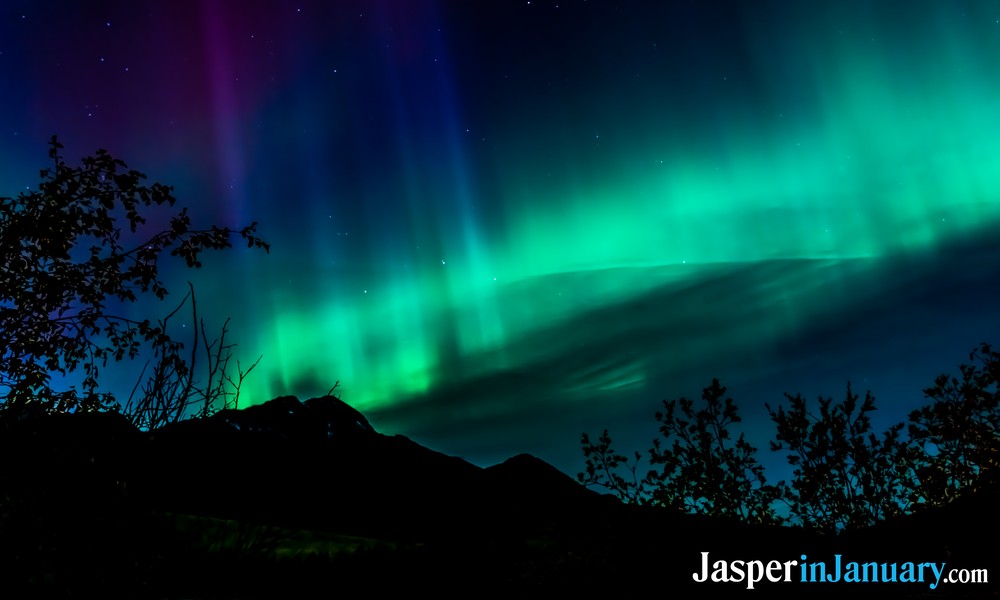
Jasper's designation as a Dark Sky Preserve enhances aurora visibility by preserving naturally dark conditions across much of the park. On clear January nights, auroras can appear as faint green arcs, rippling curtains, or more active displays that intensify and shift across the sky. Cold temperatures often coincide with clearer skies, which improves contrast and makes even subtle auroral activity easier to detect.
Viewing success depends on a combination of solar activity and local weather. While auroras cannot be guaranteed on any given night, January's frequency of clear, cold conditions improves overall odds. Many visitors choose elevated or open valley locations away from town lights, where wide horizons and minimal obstruction allow for better sky coverage. Patience is important, as auroras may appear suddenly and change rapidly over short periods.
Auroras in Jasper during January offer a quiet, powerful nighttime experience that complements the park's winter scenery. When conditions align, the combination of snow-covered landscapes and moving light in the sky delivers one of the most memorable natural phenomena available in the Canadian Rockies during deep winter.
Jasper in January Home
 Book Jasper
 Jasper in January